


1. Introduction
The Springboks can change the mood of a Saturday in South Africa. Someone fires up a braai, the match is on TV, and someone else is sure the referee got it wrong. Even people who rarely follow rugby seem to know when the Boks are playing.
There is a long history behind that green shirt. South Africa has been playing international rugby since 1891, and its national team has won the Rugby World Cup four times. For much of the twentieth century, though, the jersey meant very different things to different South Africans.
2. Where the Name Began
The Springbok name dates to the South African team's tour of Britain and France in 1906. Captain Paul Roos, vice-captain Paddy Carolin and manager Cecil Carden agreed on a name before the British press could invent one for them. They chose the springbok, the antelope known for its remarkable leaps. The nickname stuck.
The tour helped establish South Africa as a serious force in international rugby. The team's green jerseys, gold collars and springbok emblem became familiar far beyond the country's borders.

3. 1995: A Jersey with a Past
For much of the twentieth century, the Springboks were closely associated with white South Africa. Under apartheid, rugby was segregated and the green-and-gold jersey represented exclusion to many Black South Africans. South Africa was kept out of the first two Rugby World Cups in 1987 and 1991.
That history is essential to understanding what happened in Johannesburg on June 24, 1995. A year after South Africa’s first democratic elections, President Nelson Mandela walked onto the field at Ellis Park wearing a Springbok jersey. He had chosen the shirt of a team once identified with the government that had imprisoned him.
South Africa beat New Zealand 15–12 after extra time, with Joel Stransky kicking the winning drop goal. Mandela presented the trophy to captain François Pienaar. The image became one of the defining moments of the country's new democracy.
Mandela had argued that the Springbok emblem should stay. At Ellis Park, he put on Pienaar's number 6 jersey and made his argument in front of the entire country. The victory did not erase segregation or its legacy, but his decision to wear that shirt was unmistakable.
4. Three More World Cup Titles
Twelve years after Ellis Park, John Smit captained South Africa to another World Cup final, this time against England in Paris. Neither side scored a try. The Springboks won 15–6 with disciplined defense and accurate penalty kicking.
In 2019, Siya Kolisi captained South Africa to a 32–12 win over England in Yokohama, with tries from Makazole Mapimpi and Cheslin Kolbe. Kolisi grew up in Zwide township near Port Elizabeth and had become the Springboks' first Black Test captain only the year before. A player from a community once largely shut out of the national side was now lifting its greatest trophy.

Then came 2023. The Springboks survived a quarterfinal against France by one point, beat England in the semifinal by one point, and edged New Zealand 12–11 in the final. Kolisi raised the trophy again, making South Africa the first men’s team to win four Rugby World Cups.
| Year | Final opponent | Result |
|---|---|---|
| 1995 | New Zealand | 15–12 |
| 2007 | England | 15–6 |
| 2019 | England | 32–12 |
| 2023 | New Zealand | 12–11 |
5. What Makes Springboks Rugby
A Springbok scrum is rarely just a way to restart play. South Africa uses its forwards to put opponents under pressure, especially late in a match. The replacements are known as the Bomb Squad: fresh legs and considerable weight arriving when the other pack has already done an hour's work.
The 2023 World Cup semifinal against England showed why it matters. England led 15–6 in the second half. South Africa’s replacements helped swing the scrum in their favor, RG Snyman scored a late try, and a scrum penalty gave Handré Pollard a kick from about 50 meters. He made it, and the Boks won 16–15.
There is more to the team than its forwards. Cheslin Kolbe can beat defenders in a few steps, Makazole Mapimpi has made a habit of finishing tries, and Pollard's kicking has settled tight matches.
6. Match Day in South Africa
On match days, green-and-gold shirts are easy to spot, from Cape Town pubs to the stands at Ellis Park. Fans debate the lineup before kickoff and are often still talking about the result on Monday.
The celebrations are not confined to the stadium. When the Springboks returned from their 2007 World Cup win, crowds welcomed them home, including on the streets of Cape Town. After the 2023 win, thousands lined the streets of Cape Town to see the team and the trophy.

7. Our Cape Town Connection
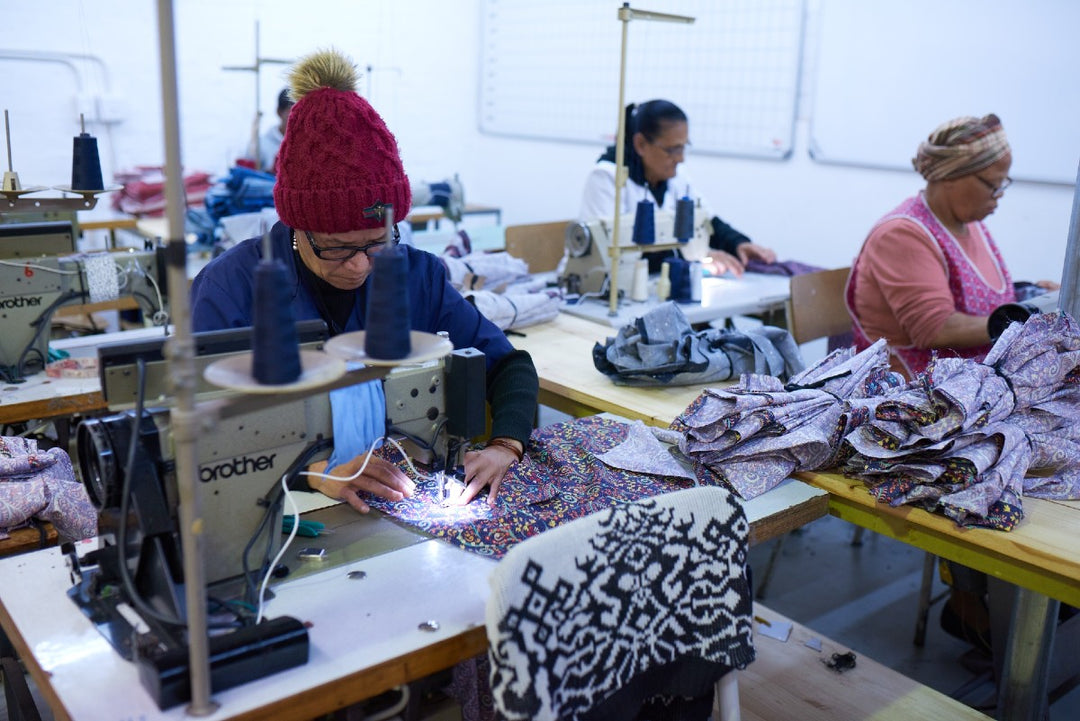
Woodstock Laundry has been making sleepwear in Cape Town since 1979. Our factory is still there, producing garments in small batches. The pajamas may be worn thousands of miles away, but the work begins in South Africa.
This Christmas, we’re introducing men’s flannel pajamas with a Springboks-inspired design. Boxer shorts and other pieces may follow.

8. Conclusion
The Springboks have traveled a long way since 1906. South Africa has changed far more than the jersey has.
For us, those stories are part of home.
9. Sources and Image Credits
- SA Rugby – The Springboks: team history and World Cup results.
- Nelson Mandela Foundation – Rugby World Cup: the significance of 1995.
- World Rugby – Mandela, Williams and Pienaar in 1995.
- Tours of Reconciliation: Rugby, War and Reconstruction in South Africa, 1891–1907: origins of the Springbok name.
- World Rugby – South Africa Team Spotlight: the team's World Cup record.
- World Rugby – 2023 Semifinal Review: the Bomb Squad, scrums and Pollard's winning kick against England.
- BBC Sport – Siya Kolisi, the Springboks' First Black Test Captain: Kolisi's background and appointment.
Featured photograph: South Africa v France, 2023 Rugby World Cup. Photo: Like tears in rain / Wikimedia Commons, CC BY-SA 4.0. Image credits for the other photographs appear beneath them. Creative Commons photographs are reproduced with attribution; no association or endorsement by the photographers or the team is implied.